World Cup water intakes: US $250 million estimate
This article discusses the financial consequences of advertising at water intakes at the World Cup, and explains the opposition it faces among fans and players.
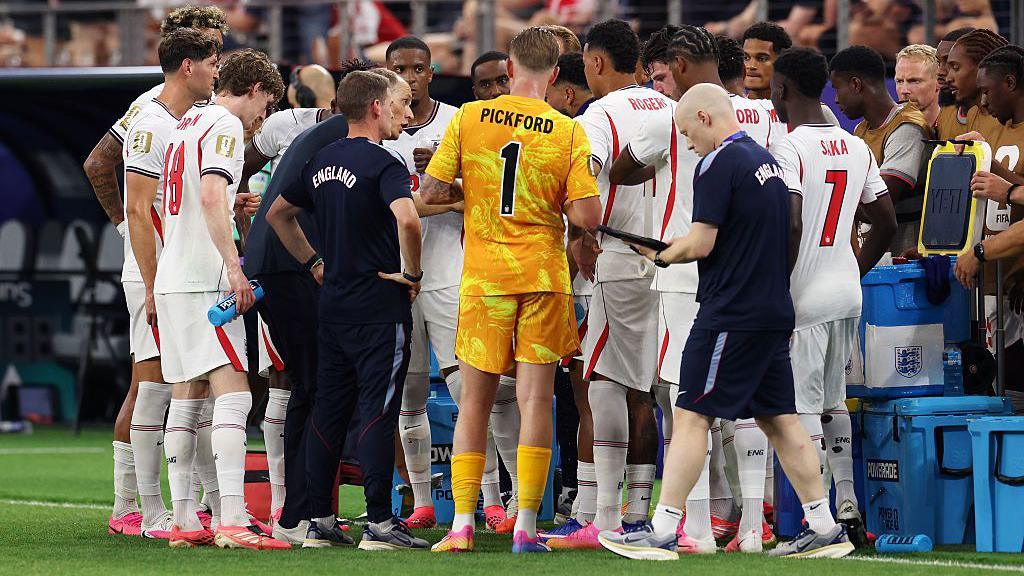
Four minutes and 20 seconds per match. Or the entirety of the match plus 30 minutes and 40 seconds. These are the extra TV ads some soccer fans will see at the World Cup's mandatory water intakes. Audiences watching on the BBC and ITV in Britain watch sports replays and hear extras from background experts, but viewers elsewhere watch commercials from recognized companies from the heart of football.
Advertisements may start 20 seconds after the referee whistles during the three-minute break, and must end 30 seconds before the restart of action. This gives each broadcaster in each country a maximum of eight 30-second ad slots for each match – 832 from start to finish of the match.
Experts speaking to BBC Sport said a 30-second World Cup ad spot on Fox Sports would cost between $200,000 (£152,000) and $300,000 (£227,000), rising to $750,000 (£567,000) for America's matches and finals. Thus, advertising at water intakes has the potential to generate $250 million (£189 million) in the US alone.
These breaks have stifled the proposals of the competition, drawn harsh criticism from administrators and players, and raised fists from fans at almost every stadium. But here's a look at which countries the ads are showing, how they work, and what this means for the future of soccer.
Fifa has said the water intakes are being introduced to protect players' well-being in the North American heat and should be used equally in every match, even in hot sheltered stadiums.
The BBC is protected from advertising in watersheds because the BBC does not use commercials, and ITV's advertising is limited by Ofcom regulations on how many commercials can be used in a 60-minute period.
Fox Sports, the American broadcaster, takes advantage of the maximum commercial time that breaks, showing commercials in full. Furthermore, advertising space is introduced as "supported by the brand", and as Fifa sponsor Coca Cola provides the players with the brand's drink, the number of adverts US visitors will encounter at drinking places is tripled.
"Americans are accustomed to seeing sports commercials from 40, 50 years ago, so culturally it's very relevant here," said Rob di Gisi, professor of sports management at the Wharton School in Pennsylvania. "There are very few objections here. Any changes that make the games more American will be accepted without notice by the audience."
Telemundo, another American broadcaster that shows matches in Spanish, is one of the few broadcasters that does not show commercials during intermissions. At Canada's opening match last week, its commentator said: "We like the old way. We want to see the players' actions. We show the fans, the people, happy, not the institutional foundations of football."
BBC Sport, Fox Sports and Telemundo have questioned the comment. Ads are also used in other major markets around the world, including Mexico, Canada, France, Germany, Italy, Spain, China, Japan, India, Australia, the Middle East and Sub-Saharan Africa.
Broadcasters in those places can't charge nearly as much as Fox Sports, and don't have the opportunity to run ads for the maximum amount of time, but the gross revenue is much higher.
"If you spread this situation to the rest of the world, you could get up to $1 billion (£756 million) at a time from advertising water intakes," said Di Gisi.
Viewers viewing the product during game breaks are not guaranteed to win. "Is the level of resistance to advertisements at the water intake sufficient to undermine the value of advertising?" said T. Bettina Cornwell, head of marketing at the University of Oregon. "When brands exceed the expected experience, that's the run of the game, and fans can react negatively."
Broadcasters in each venue operate independently when selling advertising space, so Fifa does not receive direct funding. But the extra revenue makes buying the rights to show the World Cup more important for broadcasters, so that Fifa can charge higher prices when negotiating future matches.
Fifa has not confirmed whether water intakes will be used at future World Cups, but in terms of financial benefit to the organization and its broadcaster affiliation, it is highly likely that they will remain a long-term feature, given that the 2030 World Cup will be held in Morocco, Spain and Portugal during hot summers.
▶Videos
Teams